Playing Personas
Playing your part.
The player is you. As a player, you control a persona. Usually, a player only controls one persona. The persona is a tool that allows the player to participate in the story. Using a board game reference, the persona is like a playing piece in the game. Other games call personas characters, avatars, or actors.
The referee is also a player. The referee is usually in control of many personas. The referee controls referee personas, or RPs. Referee personas interact with player personas and are essential to creating the story. Referee personas will vary from insignificant bystanders to critical components of the story. The referee uses these personas to engage with the players’ personas. This is the core interaction of all role-playing games.
All these personas create a common ground and a shared experience amongst the players. This shared experience takes place in the most fantastic simulator of all, the human brain.
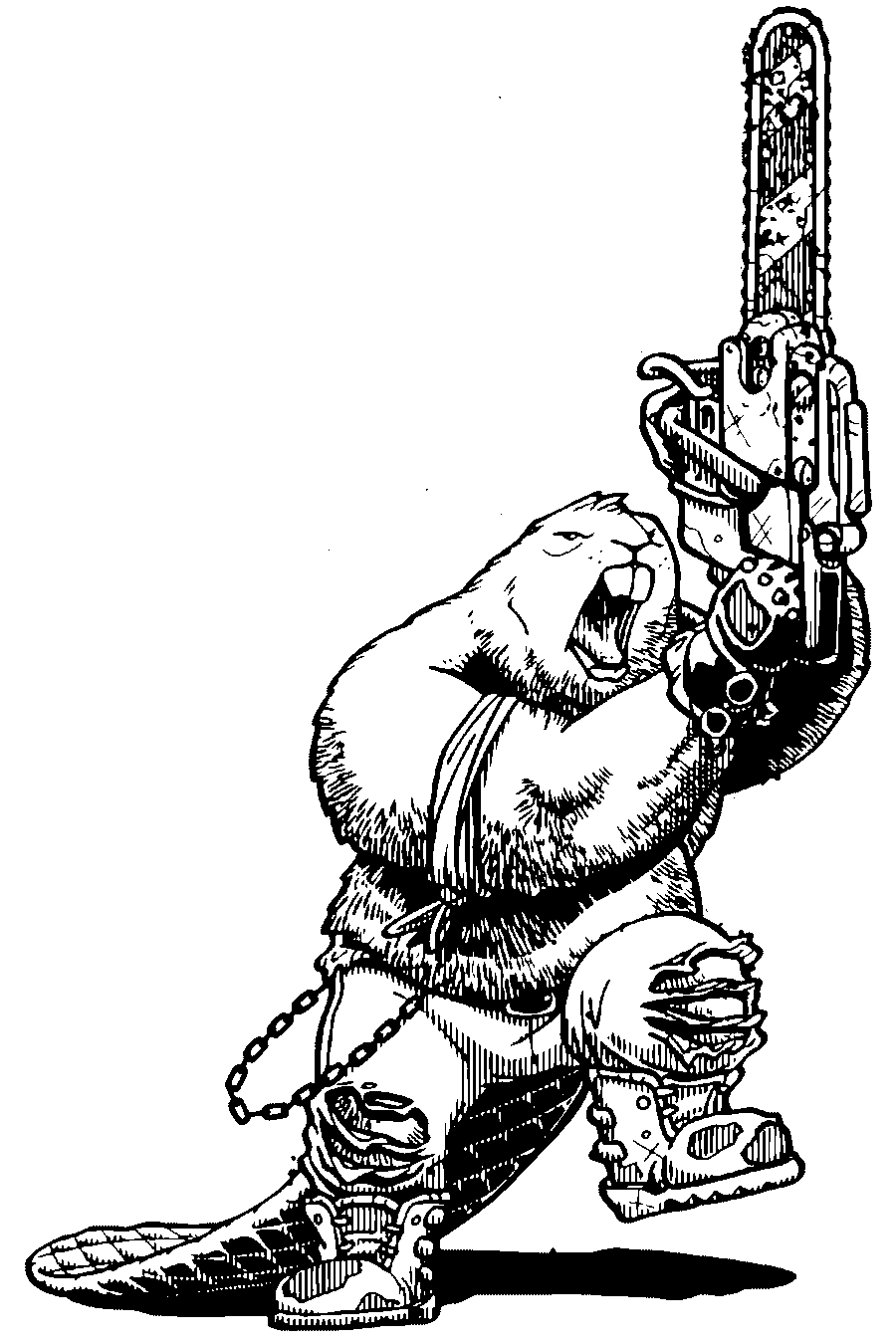
I WANT LONG TEETH!
-
Player
-
Description
-
Persona record
Player
The most important part of the persona is the player. A persona will only be as interesting, fun and descriptive as her player makes it. The player’s input into the persona is everything. A persona is nothing but numbers on a page until the player gives it that spark of life.
Description
The player needs to create a description of her persona. A player’s description of her persona creates an image in the minds of her fellow players. Those players will have quick, fun descriptions for their personas as well. The referee will have descriptions of all of her referee personas as well.
The persona’s description does not arise from pure imagination. The player rolls dice in a process called persona generation. Persona generation generates some numbers to describe the persona’s attributes like Intelligence and Charisma. These attributes let the player make choices about physical appearance and vocation. Some examples follow:
A simple God-fearing tax collector from the orbiting suburban satellite station. This introduction implies certain ideals. It is unlikely this persona would attempt to embezzle money from the emperor. She probably has high Intelligence, normal Strength and low willpower.
A happy-go-lucky model QT-1 protocol unit from your local rec centre. This introduction imparts the impression of a sycophantic cyborg. This Pollyanna may offer a cherry soda when faced with imminent warp drive failure.
Ssssssssthp, me Slythris, me chew hoole innards, me catch in tree place. This introduction is for an alien covered in scales. The hissing words may imply its appearance is sleek, sharp-toothed and camouflaged. One would not expect this alien to be a tool-user.
Persona Record
The players don’t memorize every aspect of their persona. The persona record is a record of all the persona’s elements. The sheet of paper records the persona’s attributes, species, vocation, abilities and equipment. An adequately maintained persona record helps keep track of shenanigans and keeps track of things between sessions. For downloadable PDF persona records, jump to Persona Record Sheets. If it is worth creating, it is worth writing down.
Family
The player can choose from three different persona families: anthro, robot or alien. The anthro family are humanoids like us, which makes them the easiest to play. Robots and aliens are for experienced players. The referee may also limit families and types to maintain a consistent milieu.
Attributes
The dice decide how strong, intelligent and charismatic a persona is. The attributes are straightforward descriptions of what they represent. The attribute Intelligence represents the persona’s smarts. The attribute Charisma represents the persona’s leadership skill. Each attribute has a number. The higher the number, the better the attribute. A physically strong persona could lift heavy things. Complex calculations would challenge a persona with low Intelligence.
Mutations
Mutations are imaginary biological adaptations. They give personas imaginary powers or defects. Anthro mutations are unique changes to that persona. Alien mutations represent a biological trait of the species. Robot mutations are unique malfunctioning peripherals.
Mutations can change everything for the persona. A mutation can influence the persona’s name, story, and vocation. Mutations can make a persona weak or powerful.
Vocation
The persona’s vocation is a mix of training, passion, aptitude and beliefs. A vocation is associated with a clump of skills. Depending on the milieu the referee designs, there may be schools, guilds or apprentice programs for each vocation. In the generic mythos of EXP, vocations are more about attitude and self-learning than schooling.
The persona’s attributes determine the choice of vocation. Smart personas will pursue science vocations. Hardy personas will pursue combat vocations. Example persona vocations are mercenary, biologist, nomad and veterinarian.
Other games call vocations classes, professions or jobs.
Equipment
All manner of equipment is available in EXP. The equipment varies from torches to luggage and from lazer guns to spaceships. Personas can usually purchase mundane equipment within the milieu. Personas usually find powerful hi-tech equipment or earn it by solving a puzzle. The function and purpose of hi-tech equipment may not be obvious to the personas.
Players call equipment they do not yet understand artifacts. Artifacts are most often hi-tech devices from ancient or alien civilizations. Artifacts can also be useless junk. Once players identify an artifact, they call it a toy. There is no strict canon on the usage of these descriptors.
The expedition is supposed to work together, sharing the collective wealth of their equipment. There will be many devices that players find that their personas do not understand.